Saturday, February 24, 2018

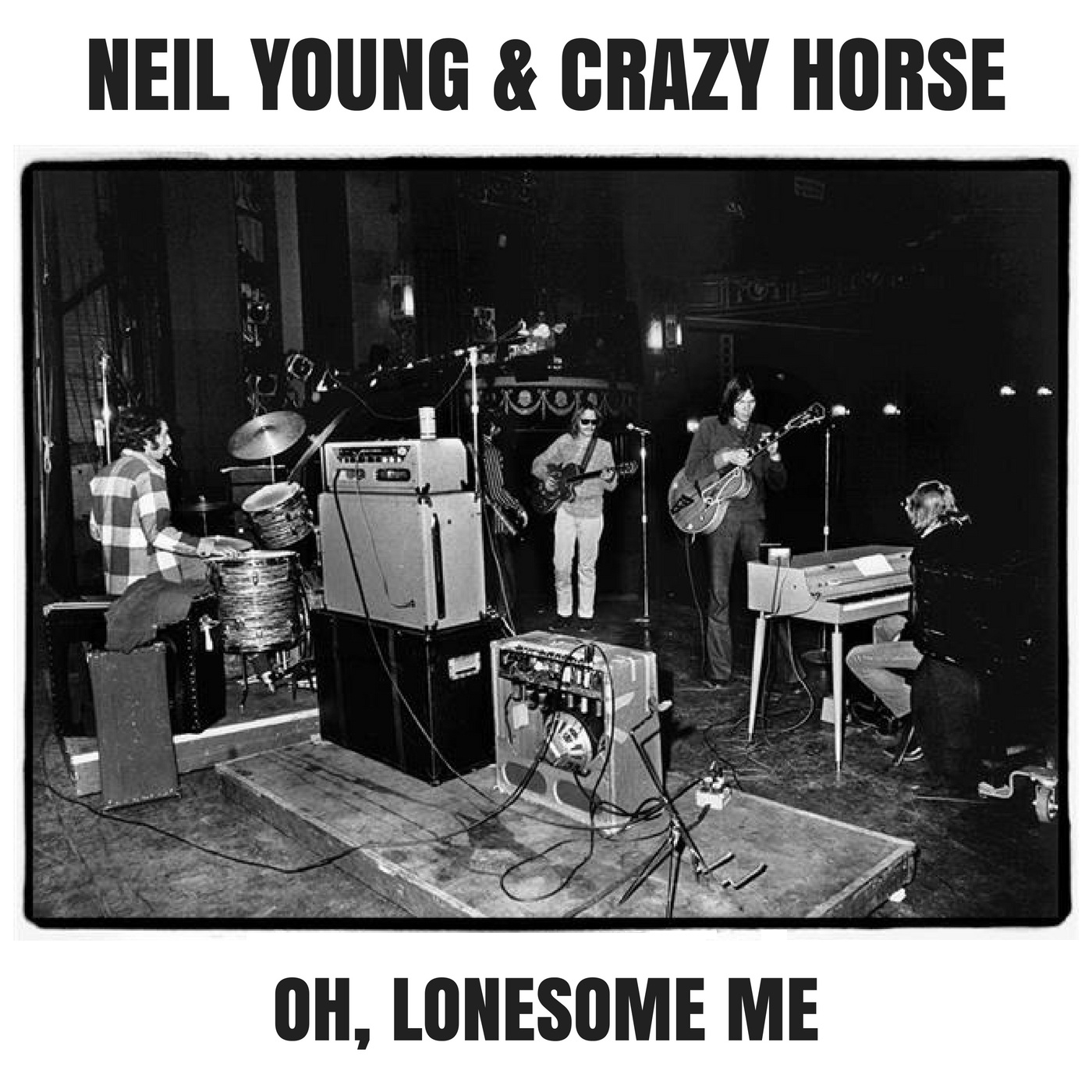
Neil Young & Crazy Horse - Oh, Lonesome Me (1970)


The Rockets were a Californian psychedelic rock group, consisting of band members Danny Whitten, Leon Whitsell, Ralph Molina and Billy Talbot. They had been together since 1963, when they began as a doo-wop vocal group, of all things, called Danny and the Memories. After several name changes, stylistic changes, a Sly Stone-produced single and relative fame on Los Angeles' nightclub scene, they released a self-titled album in 1968, through White Whale records. With Whitten and Whitsell on lead vocals and also sharing most of the significant songwriting duties, it didn't sell very well, only managing to score about five thousand copies sold and no expressive charting singles. However, their luck began to change when, in late 1968, they got in touch with Neil Young, an old acquaintance they had interacted with in '66, when he was still a member of Buffalo Springfield. After leaving the aforementioned band a couple of times and releasing his first solo album early in 1968, he saw them perform at the Whisky-a-Go-Go club, and impressed with what he saw, Young invited the group for a couple of jam sessions, with Whitten, Molina, and Talbot accepting the invitation.

After those sessions, they received an offer to become his official backing group from then on, and so they did. Rechristened as "Crazy Horse", the three of them began the recording of Neil's second solo studio album, "Everybody Knows This is Nowhere", in early 1969. After released, in April of 1969, it became a hit, with songs such as "Cinnamon Girl" becoming AM radio staples, and managing to chart much higher than his previous studio LP. The album even featured a "tribute" of sorts to the deceased Rockets written by NY, "Running Dry", even featuring ex-member Bobby Notkoff on violin. As was the norm, they toured throughout the year to promote their album, with the special addition of producer and friend Jack Nitzsche handling the keyboard duties, and so they undertook their first North American tour together as a band. And then as early as August of the same year, they began recording on and off with Young, for a possible follow-up record. In that month alone, they recorded some eight new songs, with one of them even being a Danny Whitten original, and due to all that happening in the space of a year, the future looked pretty bright for them.

However, right around that time, Neil received an invitation, right around that time, to join Crosby, Stills, and Nash in their next gig, this little festival in the middle of nowhere called "Woodstock". That extended into an album and sold-out tour with CSNY, leading to him understandably not having much time to record his album, which led to all his activities with the Horse being put on hold for the time being, the LP obviously included. After he returned, in February 1970, things had changed. He decided to scrap most CH recordings and start anew, in a brand new direction. With a different backing group, he recorded the more personal and folksy "After the Gold Rush", that when released featured only three songs with the Whitten/Molina/Talbot lineup. As with its predecessor, it was a big hit, and cemented Young's reputation as a great artist of that era. The band, however, also used their newfound popularity to their favor, recording a new DW-led album, that featured songs such as the great "I Don't Wanna Talk About It", later covered by Rod Stewart. While both parts went their separate ways, for the time being, their second unfinished effort stayed in the vaults.

However, what many of us still wondered was: how could a second NY&CH effort have sounded like? First of all, we know of the working title of it, during the August 1969 sessions. It was named "Oh, Lonesome Me" after a Don Gibson cover they recorded, and was to be released in early 1970. Second of all, I believe it would have featured about twelve songs, as they did not record any other ten-minute epics, as was the case in Everybody Knows This is Nowhere. The group's influence and output in it would have also been bigger, I think, as shown by their live performances and sessions at the time, featuring Whitten-sung numbers and such. In addition to the eight songs from the 1969 sessions, live versions by them of Young-written songs will be included here, due to the unavailability of period-accurate studio versions of them, and the fact they would probably be recorded had the whole CSNY thing not happened. Some songs from the Crazy Horse album will be included as well, due to being recorded concurrently with ATGR and to the idea that their album would feature more input from them. Without stretching it any further than this, here it is:

Winterlong (Live at Fillmore East)
Look at All the Things (Crazy Horse)
Everybody's Alone (Archives, Vol. 1 - 1963/1972)
Come on Baby Let's Go Downtown (Live at Fillmore East)
Wonderin' (Live at Fillmore East)
It Might Have Been (Archives, Vol. 1 - 1963/1972)

Oh, Lonesome Me (After the Gold Rush)
I Don't Want to Talk About It (Crazy Horse)
When You Dance I Can Really Love (After the Gold Rush)
I Believe In You (After the Gold Rush)
Dance, Dance, Dance (Crazy Horse)
Birds (Archives, Vol. 1 - 1963/1972)

Young and Whitten performing live, March 1970

Our album begins with "Winterlong". It was first recorded during the Horse sessions, but that take remains unreleased. A studio version was recorded during sessions for "Tonight's the Night", being released on Decade. In here, however, we will use a live version from March 1970, as it features the group and is from the same time period as Gold Rush. Up next is Whitten's It Might Have Been, an oddity in here as it doesn't feature Neil playing or writing in it. However, its justified by the fact that in those same sessions, the group recorded a version of the tune, and it remains unreleased. Instead, we'll use the "Crazy Horse" LP's version of it. As track number three, we have "Everybody's Alone". Recorded by both Young and the Horse and as a group effort between him and CSN, we will use the original version of it, tracked by the band, and found on his "Archives Vol. 1" anthology release. Afterward, the live "Come on Baby Let's Go Downtown" comes. Found on both "Tonight's the Night" and the March 1970 gig, we will use it as opposed to a studio version without Neil from the Horse LP, due to featuring the group's frontman, and being good enough for a different album.

As the fifth tune, we have "Wonderin'", introduced in the live album as "from my new album, when I record it". Despite being written way back then, the first studio version of it fans ever saw was recorded on 1983's "Everybody's Rockin'", in a surprisingly good rockabilly arrangement. Instead of that, we will use a live version of it, from the same gig as the other two tunes before it. A Jo London cover, "It Might Have Been" finishes off side one, then again as a live performance, but this time from an unknown venue in April '70, found on the Archives release. They did attempt a studio version, but as NY kept screwing up the lyrics on those takes, it was then rendered unusable. Starting side two is our title track, itself being a cover too, by Don Gibson. The studio version that was released on "After the Gold Rush" is our pick in here, also being one of my favorites from the Aug. '69 sessions. The surprise posthumous hit "I Don't Want to Talk About It" comes next, being written and sung by Whitten. Being the best song on the "Crazy Horse" LP, I think that it would most certainly be included on the album as it is, and due to that, we will use that version in here.

Serving as the eighth track on our reconstruction is "When You Dance I Can Really Love". Probably one of the best songs on the album, it was included on ATGR as recorded by the Horse, and would probably be released as one of the singles off this particular version, based on sheer quality. Up next is the final of three songs in here to be sourced from his 1970 album, "I Believe in You". It was also recorded with CSNY during sessions for their first album, but obviously, we will use the group version of it. Recorded and included on the Horse's album, but written by Young, "Dance, Dance, Dance" is sung by drummer Ralph Molina, and that's the version of it we'll use this time around. It was also attempted with the frontman, but then again nothing came of the tune with him, leading us to use this one. As the final track on this album, "Birds" is also the shortest song, clocking at more or less one and a half minutes. It was released as the b-side to the "Oh, Lonesome Me" single, and was later re-recorded to be used on his Horse-less album. For that, we will use the original CH take, found in the Archives collection, finishing off the album in a very beautiful way, as it should be.

Clocking in at about 42 minutes, in more-or-less evenly timed sides, "Oh, Lonesome Me" is a solid country/rock affair, being almost like a bridge between its predecessor and the hit that was to come afterward, 1972's "Harvest". In addition to all that, the non-Neil compositions and covers give this a sort of "spontaneous" feel to the LP and as a showcase for his now famous backing band, with its contrast between live and studio material. I also don't think the inclusion of live material is too far-fetched, as they have in the past released studio/concert hybrids, such as "Rust Never Sleeps", leading us to believe this could also be the case. Due to the fact that Neil is the king of unfinished albums, this particular lost LP doesn't have the same fame and mythology as "Homegrown", another of his non-projects. That is undeservedly so, because it plays a very important part on NY's discography, and helps us understand his later work. Due to it being Whitten's final work before his heroin addiction spiraled out of control, this album's release would make an album like "Tonight's the Night" a much more poignant statement about one of his greatest friends who died so tragically.

Sources:
- Live at Fillmore East, March 1970
- Neil Young - After the Gold Rush
- Crazy Horse - Crazy Horse
- The Archives, Vol. 1 - 1963/1972

Friday, February 09, 2018

The Small Faces - 1862 (1969)


The Small Faces released their landmark album, "Ogden's Nut Gone Flake", in May 24th, 1968, to massive critical and commercial acclaim, and the album is to this day considered one of the masterpieces of the so-called summer of love. Together with albums by the kinds of Traffic, the Beatles or the Jefferson Airplane, it defined the psychedelic era, and has a loyal cult following exactly 50 years after its release. It featured regular "pop" songs on the first side, and a fairy tale made up of songs and narration called "Happiness Stan" on the other. It followed Stan, a man who goes on an adventure to find the other half of the moon, and meets several characters and new friends throughout his journey. It helped the band to further distance themselves from their Rn'B and early rock n' roll roots, and establish them as a major act in Britain. However, it also proved to be unperformable by the quartet in a live setting due to its complexity and significant amount of overdubs, and that frustrated them quite a lot, especially frontman and guitarrist Steve Marriott. 

But they had to move on, and so they did, entering the studio soon after the Ogden's sessions had ended to record some newly written tracks. The first result the public saw of that was the single release of "The Universal" with "Donkey Rides, a Penny, a Glass" on the b side. Despite the sucess of their previous single, "Lazy Sunday", it charted much lower than its precedent, only being able to reach #16, which further upset Steve, who considered the tune to be the greatest song he had ever written up to that point. As the group continued recording as the year went by, they started conceptualizing a followup to their masterpiece, tentatively titled 1862, after the year a chapel next to Marriott's house was built. On and off due to their touring commitments, they recorded what amounted to about 8 finished songs, as well as three or four instrumental demos. However, after he and bassist Ronnie Lane produced a single by young band The Herd, he grew impressed of their lead guitarrist's playing habilities, Peter Frampton, and soon formed a friendship with him.

And so, in late '68, Steve suggested to his three bandmates that they make Frampton into a band member, to help with their live performances and help them overcome what he considered to be their "limitations" as a band. But the others, specially keyboardist Ian McLagan and Lane, were against the addition of a fifth Small Face, and nixed the idea. That was the final straw for the singer, and during a disastrous New Year's Eve gig, he announced his departure from the band, and simply left the stage. The band finished the rest of their already booked concerts, and called it quits in March 1969. Steve formed Humble Pie with Frampton soon after the breakup, and they went on to record their first two albums that same year. He tried to convince McLagan into joining, but he instead stayed with his other bandmates, who with ex-Jeff Beck Group's Ron Wood and Rod Stewart formed the Faces, and released their first album in 1970. With the unfinished album nowhere near a release-worthy status, their label released a comp called The Autumn Stone, and released the more finished tunes there.

However, what every SF fan wondered was: what if they had actually finished the album and released it? What we actually know, is that it wouldn't feature a medley or concept, as they considered that formulaic after the success of ONGF. We can also assume that it would base itself on a 12 song, 40 minutes template, as was the norm at the time. We also have a list of songs, written by their guitarrist, of the album contenders up to then. It only features 9 tunes, with three of those being instrumentals, and two being the same under different titles! Due to that, I won't consider it as a tracklist, but will take it into account in other ways, when building my own. We also will allow some of the songs recorded by their "spinoff" bands soon after the breakup, due to them either featuring in his list, or being on complete by the time they were recording 1862. From that, however, we will exclude two songs: "Pig Trotters", being an instrumental version of  "Wrist Job", and "War of the Worlds", listed as "Blues Jam" due to being too incomplete. Without further ado, here it is:

Wide Eyed Girl on the Wall (The Autumn Stone)
Call it Something Nice (The Autumn Stone)
Red Balloon (The Autumn Stone)
Wrist Job (As Safe as Yesterday Is)
Hello the Universal (The Autumn Stone)
Wham Bam, Thank You Ma'am (The Autumn Stone)

Buttermilk Boy (As Safe as Yesterday Is)
The Story of Evolution (First Step)
Growing Closer (As Safe as Yesterday Is)
Donkey Rides, a Penny, a Glass (Ogden's Nut Gone Flake)
Collibosher (The Autumn Stone)
The Autumn Stone (The Autumn Stone)

Bonus track:
Every Little Bit Hurts (Ogden's Nut Gone Flake) 

Marriott, Jones, McLagan and Lane in late 1968.

Our reconstruction starts off with "Wide Eyed Girl on the Wall", written by Marriott and Lane. A great horn-driven instrumental, I consider it not to be an unfinished tune without vocals, but yes an attempt at a "scene setting" instrumental, just like the title track of their previous album, causing it to be the first track. Up next is "Call it Something Nice", with vocals by Ronnie and again written by the two. Begun in late 1967 during the Ogden's sessions, but held over for its follow-up, it's a great little ditty, that despite only having a working title, deserves a spot in here. "Red Balloon", a Tim Hardin cover, is the third track of the LP, and most probably the greatest song on the album, sung by Steve, and was recorded soon after the sessions for the aforementioned LP ended, being a fantastic acoustic rendition of it. Afterward is the organ-driven "Wrist Job", the first non-Small Faces track, is included due to being on the contenders list, and fitting in seamlessly with the other tracks, as well as being a vocal version of their "Pig Trotters", sung and written solely by their frontman.

"Hello the Universal" is next, retitled to the band's wishes, as it was titled incorrectly in the single. Recorded by Steve alone in his garden, with studio overdubs by the others, was then again written by Lane and Marriott. Finishing the first side we have "Wham Bam Thank You Ma'am", a hard-rocking tune that was released as the b-side to their final single, "Afterglow". This tune serves as a companion to the style HP would later base themselves on, and we can barely tell they're played by different bands! Speaking of the devil, we have the Pie's "Buttermilk Boy" opening side two with a bang. As it featured in the contenders list and fits like a glove with the rest of the material, it deserves to be included in here. If you're wondering what is "The Story of Evolution", its simply "Stone" from the Faces' "First Step", edited to match the state it was in in late-1968, as showcased in the demo Lane recorded of it, released in Who Came First. I chose the more finished 1970 version of his solo tune, editing it down to both fit in and resemble more how it was at the time of recording this album.

"Growing Closer", by Humble Pie, was written by Ian McLagan, who when writing it was in between the two bands, eventually choosing its rival. It was written by one member and performed by another, with vocals by Marriott, so I think its fair to say it has merit to be included here. "Donkey Rides, a Penny, a Glass" comes next, being sung and written by both Steve and Ronnie. We will use a different version of it, featuring a brass overdub, as I feel its more finished than the released one (and a bit of variety sometimes is nice, as well!). As the second-to-last on the LP, "Collibosher" is an instrumental, being pretty similar to the opening track as well and I also consider it to be a finished song rather than a backing track. Written by SM alone, it was begun during the final session for Ogden's but finished sometime later. Wrapping up their farewell is "The Autumn Stone", the title track to their 1969 compilation. Written by Marriot/Lane and sung by the former, with guest Lyn Dobson on the flute, it gives the band the fantastic goodbye it deserved, in their final album and song.
 
As an album, "1862" is a pretty bold statement by them, showing a more folk and blues-oriented side, while abandoning the psychedelia of their previous record. They develop here a more hard rocking style, almost a sampler of their later bands, while also keeping that cheeky British and folksy side to it, as they knew wonderfully how to do. The album is about 41 minutes long, with both sides being more or less even in length. Its lead single would probably be "The Autumn Stone" b/w "Wham Bam", as it was a scrapped 45' that wasn't released due to their breakup. As a b-side to the second single, "Red Balloon", we can use another cover, the great ONGF outtake "Every Little Bit Hurts", also included here as a bonus track, used after being relegated from the original LP. The band most certainly would still split, due to the wounds between them all being too deep to solve that easily. However, by delaying that only by a couple of months, we get a great album, and proper farewell for them. It's a shame we didn't get this final glimpse of their brilliance, before they ceased to be small.

Sources:
- The Autumn Stone
- Ogden's Nut Gone Flake
- Humble Pie - As Safe as Yesterday Is
- The Faces - First Step

Tuesday, January 23, 2018

Pink Floyd - Spare Bricks (1982)


"Pink Floyd - The Wall", released in 1982, was Pink Floyd's second full-length film, and was based on their album of the same name. It featured most of the album's songs in their original form, and followed Bob Geldof playing the role of Pink, as he built an imaginary wall between himself and the world, also explaining the reasons that led him to do such a thing. Mostly driven by the music, the film expanded on the original rock opera's narrative's themes of war, isolation and even the very own nature of rock and roll, being a great companion piece to the LP, as well as a fan favorite of many. The film was pretty well received by the critics, and was even a moderate success at the box office, screening from July 1982 to early 1983. The flick combined Gerald Scarfe's surreal animation sequences with other additional live-action scenes, written by Roger Waters himself, who later criticised the way his screenplay and vision were treated, saying it didn't do them justice. In addition to all that, it also featured a new song, "When the Tigers Broke Free", originally written for the 1979 album but dropped before the recordings started, due to being "too personal", for the band and producer Bob Ezrin's liking, but brought back for this project. Other songs, such as "Mother" and "Bring the Boys Back Home", were re-recorded entirely, featuring different, more orchestral arrangements or different interpretations, to better fit the narrative and visuals of the motion picture they were inserted on.

Because of that, there were plans by the group of releasing a soundtrack album with the re-recorded tracks and the new song, as was announced in the credits of the movie, with a planned release date of November 1982. Pink Floyd also planned on adding other songs, either The Wall leftovers or newly written tunes, to help make up an album, since the movie versions weren't enough to make up a full album, and the band felt fans wouldn't buy an album of rehashed older material only. It was also supposed to flesh out its narrative, adding some more depth to the story with these new tunes, as the band had to work within the limitations of the LP. The "Spare Bricks" sessions, as the album was now known, then began in mid-1982, with the band recording about six new songs, all of them written by Waters. However, in May of the same year, after album sessions were already underway, Argentinian dictator Leopoldo Galtieri invaded the Falklands Islands, leading to a war against the UK for the area. Roger Waters was enraged by this, and began writing a new concept. That conflict caused a direction change on the album, which then became "The Final Cut - A Requiem for the Post-War Dream", with him writing the rest of the LP's material based on the war and his feelings about it. Since the band was already uninterested in the soundtrack idea to begin with, Waters decided that scrapping SB and starting anew was the right thing to do, as the next Pink Floyd album.

So instead of a new album, all the band's fans got in that year was a single, with "When the Tigers Broke Free" on the A-side and their new orchestral version of "Bring the Boys Back Home" on the B-side, in July 1982. It charted considerably well, considering it's nature, peaking at #39 and being well received by critics. However, now that the album had grown into a standalone unit, problems arose: in-fighting within the band was at an all-time high, with Gilmour and Waters simply not getting along. The lead guitarist's lack of productivity also further extended the issues, with him later criticizing the album for its overtly political tone and lack of musicality, and ends up only singing lead vocals on one of The Final Cut's songs. With keyboardist Rick Wright long gone by this point, the piano parts were played by the album's producer Michael Kamen, who also wrote most of the orchestration on it. He proved to play an essential role on the sessions, but did not manage to ease the tensions between the band members, as Bob Ezrin had before him, and his more passive approach in producing could be seen, with Roger finally managing to take the reins of the band. Due to all that was mentioned above, Floyd fans were left without a "real" release of the soundtrack, and even to this date, the seven movie-exclusive songs haven't been released anywhere, leading the rerecordings to be largely forgotten among the listeners, and very few info being available about them.

However, what some of us fans were left wondering was: if Pink Floyd had carried on with the project as was intended, what would that album look like? Well, to start off, the six newly written songs would obviously, with some minor lyrical changes, be released on TFC, so it is our main source of material in this reconstruction. All tunes featured here were recorded with the intention of being a part of SB, between 1981-82 by the band, with only one notable exception, that will be explained later. As well as that, all of the film songs would be taken from a fan-made DVD rip, since it hasn't met an official release yet, and any other sources aren't available. That implies that most of these songs will feature some sound effects from what was happening onscreen, but unfortunately, those are unavoidable. The album's sequence will be mostly inspired by the one on The Final Cut, because of our familiarity with the album and the direct linking of some tracks, thankfully making my job a lot easier. The songs from The Wall are not sequenced in order of appearance, however, but on the spots I felt they fit on the best within the LP, to make up the best listening experience possible within our limitations. Very few editing was needed in this, mostly to make the songs segue smoothly, and since it's no use to try and avoid the many sound effects in the songs, the movie tunes are left mostly unaltered from their original state on the movie. So without any further ado, here's our tracklist:

In the Flesh (The Wall Soundtrack)
Your Possible Pasts (The Final Cut)
One of the Few (The Final Cut)
When the Tigers Broke Free (The Final Cut)
The Hero's Return (Not Now John B-Side)
What Shall We Do Now? (The Wall Soundtrack)
Another Brick in the Wall, Pt. 3 (The Wall Soundtrack)
-
Bring the Boys Back Home (The Wall Soundtrack)
The Fletcher Memorial Home (The Final Cut)
Mother (The Wall Soundtrack)
The Final Cut (The Final Cut)
The Moment of Clarity (The Pros and Cons of Hitch Hiking)
Outside the Wall (The Wall Soundtrack)

Waters, Gilmour and Hugo Zuccarelli during the TFC sessions, 1982
Starting off the album is the re-recording of "In the Flesh", which is led by an almost Wagnerian orchestral arrangement and features actor Bob Geldof unaccompanied on lead vocals. As an intro for the album, a snippet of "The Little Boy that Santa Claus Forgot" by Vera Lynn is used, in order to emulate the beginning of the film, that featured the aforementioned song as its opener. That is followed by "Your Possible Pasts", whose chorus was recited as a poem by Geldof as a part of the tune "Stop" in the flick. One of the first to be recorded for the LP, it was based on some early ideas written early on for The Wall by Waters, but that were scrapped beforehand, more than justifying its inclusion in here. After that comes "One of the Few", featuring Roger alone on acoustic guitar and vocals. Originated from the first 1978 demos for TW, it was originally named "Teach", and is sung from the point of view of the Teacher from "Another Brick in the Wall, Pt. 2", having been brought back from there by the band for use in this project. "When the Tigers Broke Free" comes next, featured on a different, slightly longer mix with different vocals in some spots, as well as added military snares to certain sections of it. At first rejected by the band due to being "too personal" on the original album, back then when it was titled "Anzio, 1944", it was not forgotten by Waters, finally finding a home in the film. Being the only new song in it, it more than justifies its own inclusion in here.

Up next is "The Hero's Return", first recorded as "Teacher, Teacher" during the The Wall sessions. The version used here is an edit of both parts, joining them together and excluding the verse about "the gunner's dying words", as it doesn't quite fit. Also sung in the POV of the teacher, it was the first song recorded for the project, what led to its appearance here. Track no. 06 is "Another Brick in the Wall, Pt. 3", here re-recorded in a slightly faster tempo than the original, and with it's classic "TV smashing" intro intact. "What Shall We Do Now?" finishes up the first side, having been excluded from the original album at the last minute due to the album's length and the constraints of vinyl. It's a shame it couldn't be featured on the LP, but it ended up finding a good home on the movie and soundtrack. It features a reprise of "Empty Spaces" as its first section, then leading to a different, fast-paced section, that is exclusive to it. "Bring the Boys Back Home" is next, an orchestrated version featuring vocals by the Portaddulais Male Voice Choir, not featuring any Pink Floyd members in it, and was the only of two songs of the film to see an official release. "The Fletcher Memorial Home" follows, having been written for SB, without any leftover material being used on it. This version doesn't feature its spoken word bridge, since it was only added after they had shifted towards The Final Cut, and dates the song considerably, with its many references to 1980s politics.

"Mother" is next, being re-recorded almost entirely, with the exception of its guitar solo section. The only song on the album to feature a lead vocal by David Gilmour, it has a much slower and different arrangement than the LP version, being mostly orchestral and led by a glockenspiel, instead of the acoustic guitar-led arrangement it had before. Afterward comes "The Final Cut", having been inspired by many "bits and pieces" left over from The Wall, and even featuring a reference to it in its lyrics. The line "I'll tell you what's behind the wall" is obscured by a shotgun blast, in order to try and disguise its connection to TW. Most probably, if SB had happened, it would have been present in its original form, but since there isn't a version without the blast, the regular one is used here. "The Moment of Clarity" is next, being recited by Bob Geldof as a poem during the movie. While not appearing as a song per se, it was performed in the movie, and due to that, I think the band would end up recording it for Spare Bricks. Since that didn't happen, we use Waters' solo version, released on The Pros and Cons of Hitch Hiking, instead, with him alone on acoustic guitar. Finally, "Outside the Wall" ends the album, in a longer and much less ironic version. It features an instrumental bridge, with the melody of "Southampton Dock", from TFC as its main motif, and is mostly orchestrated, and with Waters on lead. It ends the album on a much more positive note than the original, and also gives it a proper ending.

"Spare Bricks - Music from the Film" is a pretty decent companion piece to The Wall movie and album, adding more depth to it's narrative than ever intended before, and also finding a home for many of its outtakes, that were otherwise without any proper context, stranded in TFC. With both of its sides clocking in at about 23 minutes, it would easily fit into the vinyl's constraints, and with 13 songs, makes up for a solid listening experience. The most probable lead single of the album would be "Your Possible Pasts" backed with "The Final Cut", due to them being released that way as a promo single for TFC, and being part of the new material recorded for the project, it would make sense to think that. As even as a promo, it managed to climb to #8 on the charts, I'd consider it would manage to be a hit, with the single release and Wall association probably helping it. As a standalone album, there's no doubt that it suffers considerably, with the new material making up for about half the LP, and even still, of a slightly sub-par quality. However, as a companion piece to The Wall, it works quite well, proving to be an essential piece of the rock opera's lore, and giving the movie re-recordings a home, instead of being lost as they are at the moment. With the original LP's 40th anniversary on the way, a deluxe edition featuring the film tunes, without sound effects would be the ideal thing to do. But until then, we're all left to speculate about The Wall's lost spare bricks.

Sources used:
- The Final Cut (2004 remaster)
- The Wall - Music from the Film
 - The Pros and Cons of Hitch Hiking
- Not Now John single
- When the Tigers Broke Free single