Friday, October 04, 2019

The Beatles - Falling Rain (1970)


The Beatles' thirteenth and final album, Abbey Road, was released on the 26th of September, 1969, through Apple Records. It was recorded between February and August of the same year, immediately after their failed "Get Back" sessions of January, in which they tried to "strip down" all the complex overdubbed work they had done ever since the Beatles had stopped touring, and go back to a more natural, live sound. Said sessions ended with tensions very high and its album and television special both postponed indefinitely, after George Harrison quitting the band and then returning a few days later, and a couple of attempts of putting an album together by engineer Glyn Johns in February. With all those issues, it's surprising they were in such a good, amicable mood during the sessions for the Abbey Road album, when they reunited with George Martin and went back to their more traditional way of recording, with overdubs and all. That was always justified by all authors and biographers as the group knowing the whole thing was all over and giving it another go, to give the band a proper finale and a deserving farewell. However, that whole narrative started to become questioned when a tape of one of the final Beatles meetings was unveiled this year by Mark Lewisohn.

The meeting, which took place two weeks after the sessions for the album ended in August 20th, had three of the band members (with the exception of Ringo, who was sick and couldn't attend) discussing their plans for the band's next move, including another album and a single, possibly to be released before Christmas. What's more surprising about that is that John, who would famously quit the band only twelve days after that, seems to be the one that's the most interested and adamant about the band's future and his plans for it. He suggests that they divide the material more fairly, with four songs each for John, Paul, and George, and two songs for Ringo, "if he wants them". George is obviously a fan of the idea, and the formula is met with the most resistance by Paul, who responds with “I thought until this album that George’s songs weren’t that good”, and seems uneasy with all those suggestions, being promptly rebutted by George and John. Either way, said tape goes to prove two things we all thought were the truth to be wrong: John's departure wasn't as planned and definitive as it would seem, at first, and they didn't plan for Abbey Road to be their final album from the beginning, and not even after it was finished.

So, what the whole world has been wanting to know ever since the band broke up is: what if they had done as planned and went along with John's idea? Well, how they would have done it is a pretty complicated question and involves a lot of issues, which are better not discussed. Let's just say that Paul received John's idea with more ease and went along with it, and the rest worked out well. However, for our timeline to work, we need to set up some lore first. First of all, for the whole timeline to work, the Get Back album needs to have come out sometime in early 1969, preferably March. The reason for that is that the band had just signed a new deal with Capitol Records for the distribution of their records, and they needed new product for the following year. In our timeline, that would be the Let it Be album, but without that, the commercial need for a new Beatles album would be yet another reason for them to make one last record. And considering things were definitely not as bad as they were at the beginning of the year, by then, I doubt they'd mind it that much. John still releases his solo singles and gets the Plastic Ono Band together, and George is planning to record a solo album late in the year, something he'd been considering since 1968. Also, any and all ideas for a concert or tour are obviously nixed.

For this to not become yet another "internet person puts his favorite solo Beatle songs together and calls it an album", we will have to take a different approach to piece together the Beatles' fourteenth album. And that will be selecting all songs that were either seriously rehearsed by them during the Get Back sessions or before, or were written during the band's existence and presented for consideration. There will be a couple of exceptions to that rule, which will be explained later, but it helps to keep proceedings historically accurate, instead of being yet another playlist. It would have been recorded between January and April 1970, being produced by George Martin, as usual, and recorded in Abbey Road studios, as all other Beatles albums had been. We will mostly keep to the 4-4-4-2 rule, with one exception: Ringo only gets one song. And that's for two reasons, firstly due to time constraints, as the songs are pretty long and 14 songs would be stretching the length a record can store, and that he only really had one good song ready, so why bother giving him two? It would then feature 13 songs, as well as a non-album single, "Maybe I'm Amazed", with Ringo's "Early 1970" as the b-side. Without further ado, here's our tracklist:

Gimme Some Truth (Imagine)
All Things Must Pass (All Things Must Pass)
Every Night (McCartney)
Jealous Guy (Imagine)
I Me Mine (Let it Be)
That Would Be Something (McCartney)
Isn't it a Pity? (All Things Must Pass)
-
Another Day (RAM)
Let it Down (All Things Must Pass)
Mind Games (Mind Games)
Hot as Sun (McCartney)
Oh My Love (Imagine)
It Don't Come Easy (Ringo)
The Back Seat of My Car (RAM)

Bonus tracks:
Maybe I'm Amazed (McCartney)
Early 1970 (Ringo)
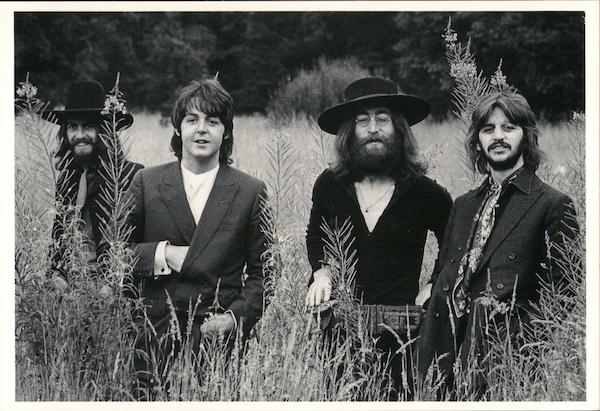

The group during their final photoshoot, August 22nd, 1969

First off, we have a couple of songs that despite fitting in with the rules of this reconstruction, will not be included in the album. Those are "Teddy Boy" and "Junk", by Paul, which were already presented to the band on multiple occasions and rejected by all of them. John explicitly said that he thought lesser songs such as Maxwell's Silver Hammer should be given to other artists, and I think that's what would happen to both songs. John's "Look at Me" is a different story, as it is a bit too similar to "Oh My Love", with the latter being the better tune. As for George's many rejects, I only added songs that were seriously considered by the band, and left the rest to fill up his solo record. There are also some songs that break the rules, and those are "That Would Be Something", which despite being written in November 1969, was a favorite of George's, and fills up Paul's fourth spot, as it was empty by then. The single, Maybe I'm Amazed, was also written later, sometime in January, but gets a pass. Ringo's two songs also were written after our stipulated date, but still pass, as they are the only way we'd even have anything from him. The sequencing was lightly based off on Abbey Road's, especially on side one, and mostly on what I thought fit the best together, giving us two sides verging on 24 minutes.

As for the writing dates, most songs date from the Get Back/Let it Be sessions, with a couple of exceptions. Those include Jealous Guy, which was begun as Child of Nature in India, before being rewritten for John's Imagine album, not being recorded for the White Album as it was considered too similar to "Mother Nature's Son". Go figure. "Isn't it a Pity?" dates all the way back to Revolver, and goes a long way showing how neglected George's songwriting was by the rest of the band, from early on. "Let it Down" and "Oh My Love" both date from November 1968, the first being the result of George going to spend Thanksgiving with Dylan and the Band, and the latter written and first demoed when John was moving out from his Kenwood home, following his divorce. Two of John's songs, the aforementioned "Oh My Love" and "Gimme Some Truth", even feature George on guitar, and both George and Ringo guest on each other's songs, giving them even more credibility as Beatles tracks. And although it might seem strange to have "I Me Mine" in here, we have to take into account that the band wouldn't have added it to LIB in our timeline, leaving it as an option for us. And having a song with more than two Beatles on a Beatles record is always a good thing!

As for the arrangements, not much would change on Paul's songs, considering they were pretty stripped down and Beatlesque as they stand. The more obvious changes would be John and George doing the harmonies instead of Linda, maybe some electric guitar by George on "Every Night", and so forth. I could also see the second solo on "Maybe I'm Amazed" being written by Harrison, and John urging McCartney to turn the scat sections of "The Back Seat of My Car" into actual lyrics. As for John, we would have less Spectorized production on his Imagine numbers, and nice George Martin string arrangements being given to those and "Mind Games", as well as much better bass lines and occasional guitar parts, of course. As for George's songs, those would be the ones with the most radical changes, I think, sounding much more like "Something" and "Here Comes the Sun" in terms of production. The horrible Mariachi-like horn sections of "All Things Must Pass", "It Don't Come Easy" and "Let it Down" would be gone, and John and Paul would have a field day on the harmonies, as well as making the bass much more interesting. "Isn't it a Pity?" would obviously be the short version, and all guitars would be handled by him, with no need for Clapton.

I chose the title Falling Rain, from one of the only two verses of "That Would Be Something", as it has a nice ring to it, especially paired with Linda McCartney's picture of the cherries, which I personally think is one of the best covers of all time. A pretty introspective and sometimes dark album, it sounds to me like a midway point between Let it Be's tension and strive, and Abbey Road's more relaxed polishedness, showing a much more mature band, with some lighter moments courtesy of Ringo and Paul. In addition to the "Maybe I'm Amazed" single, I can easily see "Jealous Guy" and "Isn't it a Pity" getting released as a double a-side single, as was the case with "Something" and "Come Together" in 1969. Falling Rain would also signal a return to more concise, song-focused songwriting, after their experimentation with the Abbey Road Medley and its expanded format. It would obviously sell well and be lauded accordingly by the critics, as it really stands well as an album even when collected from solo recordings. We all know we will never know for sure what's the answer to the perennial "what if the Beatles never broke up?" question, but that's really part of why it's so much fun to even wonder in the first place, playing this mind game.

Sources:
- John Lennon - Imagine
- George Harrison - All Things Must Pass
- Paul McCartney - RAM
- Paul McCartney - McCartney
- John Lennon - Mind Games
- Ringo Starr - Ringo
- The Beatles - Let it Be

Tuesday, July 16, 2019

The Who - Empty Glass (1980)


Keith Moon, drummer for The Who, passed away in late 1978, shortly after the band released their "Who Are You" album. The band finished the editing of "The Kids are Alright", a documentary about the band that was being produced since late 1977, right before his death, and its release was dedicated to him, as he passed merely weeks after the band approved the film's rough cut, not changing anything of the cut after that. His death devastated many fans around the world, and it was expected that the band was going to break up as an effect of that, and also due to him being a vital part of their sound. However, the remaining three members of the group decided to carry on, soon afterward recruiting ex-Small Faces and Faces drummer Kenney Jones as his replacement, and went on a large US and European tour the following year. The tour, their first full-fledged one in more than three years, was criticized by many, mostly due to the stark difference in the drumming style of Jones and his predecessor, and a tragedy in Cincinnati that killed 11 people just before one of their performances didn't help matters either, leading to a very negative mood within the group.

At the same time as the tour was beginning, this incarnation of The Who entered the studio for the first time, to record new versions of "Quadrophenia" outtakes, to be used in the motion picture of the same name, based on their 1973 rock opera. The band debuted many freshly written tunes in their live performances, mostly led by Pete Townshend, with some of them even managing to become live staples for them. It seemed that the next logical step was for the band to record an LP with those songs, as had been the norm until then. However, Townshend had other plans, and ended up recording a lot of the material they had performed, as well as other songs he had written the previous year, as "Empty Glass". His first real solo album, it was mostly based on his estranged relationship with his wife Karen, his ongoing alcohol addiction, and even a couple of nods to Moon, his deceased bandmate. The album was pretty well received by the fans and critics, even managing to score a hit, with "Let My Love Open the Door". Even Roger Daltrey, one of his fellow band members, expressed his liking for it, even citing a couple of songs he considered his favorites off of it.

The other members of the band weren't idle during that whole time either, with Roger releasing the soundtrack to the movie "McVicar", on which he also played the lead role. John Entwistle, however, spent that time recording the bulk of his "Too Late the Hero" album, which ended up only being released in 1981. After that small break, touring started again throughout 1980, with them booking time in the studio for the final months of the year. That led Pete to write all of their next album, "Face Dances" during that short period of time, with John also writing a couple of songs for it. When it was released, however, the first Who album without Keith Moon was bashed by critics, and despite the success of "You Better You Bet" as a single, failed to make as much of an impression as their albums often did. Because of that, comparisons between both Face Dances and Empty Glass, written and released one year apart, became inevitable, with almost always EG being seen as the superior album, and Daltrey even accusing the guitarist of saving the best material for himself, on one occasion.

However, what was in the back of every fan's mind during that time was: what if they had recorded "Empty Glass", instead of it being just a solo album? To start off, it would probably still follow the tracklist and be mostly songs from that album. No tracks from Face Dances will be included here, so that both albums can exist as mostly separate entities. This is going to be mostly an imaginative effort, due to the lack of Who versions of the tracks, so we'll have to stick to our imaginations for the time being. Only one cut by bassist John Entwistle makes the album, due to that being generally the number he got for each album, even though Who Are You featured a record-breaking three by him. No songs here are sourced from McVicar, however, since it features only covers, and the last time they had included one in a studio album was in 1969, so I doubt they'd record any. "And I Moved" is taken out of the album, to make place for Entwistle, and also due to its lyrical content, which I doubt Roger would be happy to sing. Without stretching this any further, here's our tracklist:

Rough Boys (Empty Glass)
I Am an Animal (Empty Glass)
Dance it Away (All the Best Cowboys)
Let My Love Open the Door (Empty Glass)
Back on the Road (Music from Van Pires)
Jools and Jim (Empty Glass)
-
Keep on Working (Empty Glass)
Cat's in the Cupboard (Empty Glass)
A Little is Enough (Empty Glass)
Empty Glass (Empty Glass)
I'm Gonna Get Ya (Empty Glass)

Daltrey, Townshend, and Jones playing live, 1980

Our 1980 Who album begins with "Rough Boys", which features Kenney Jones on drums, playing as a guest on Pete's album. In some interview, Roger has stated he felt some of the album's songs would be better suited for The Who, going as far as citing this song, being an indicator he enjoyed it, apart from its pretty risqué lyrics. I'd think that its arrangement would be mostly untouched, apart from the vocals, of course, as the song already has a pretty Entwistle-like bassline (courtesy of Big Country's Tony Butler) and Jones on drums. Afterward, comes the great "I Am an Animal", which they even debuted on tour in '79 during a couple of encores. It would still, I believe, feature Pete on the lead vocals, since it suits him better than Daltrey's "stronger" vocals would, considering it's acoustic and midtempo. As track no. 3 we have the only actual Who track on the album, with "Dance it Away". First performed live as a jam out of "Dancing in the Street", it has Jones and Entwistle on bass and drums, only needing a Daltrey vocal to become a full-fledged Who song, adding a hard-rocking edge side one didn't have before. It fits in with the EG material like a glove.

The lead single off the album would most certainly be "Let My Love Open the Door", which managed to hit #9 in the Billboard charts. Since Daltrey even covered the song recently, with Pete guesting on acoustic guitar and backing vocals, we can assume he is a fan of the song, and they would most surely record it. His version is not included here due to the sheer difference in age between it and the rest of the songs, making it sound pretty out of place within the album. Entwistle's song is "Back on the Road", from his Music for Van Pires soundtrack. Despite being released in 1998, it was first recorded in 1979, and its lyrics about the pressures and reliefs of the road fit in like a glove with Pete's material, only needing a lead guitar track from him. The short and fast-paced "Jools and Jim" comes next, which was written during one of their tours, but not played during it, and as in the original album, finishes the first side of it. Starting off side two we have "Keep on Working", first demoed in 1977, during sessions for "Rough Mix", but never recorded until the time came for his album. I believe it would still have been sung by its author since it sounds pretty good as it is, and I don't believe Roger would be able to do it justice, so it remains the same.

Up next is "Cats in the Cupboard", which was featured in several of their encores during that time. Due to it being a pretty energetic tune, I believe the band's lead singer would do a great job on it, and would probably become a consistent live staple for them. As the eighth track, "A Little is Enough" is a great tune, and reportedly Townshend's favorite song off the album, as he has stated in some interviews and his autobiography. Since in his solo gigs he has played it constantly since releasing the song, I believe the band would have done the same thing. We move on to "Empty Glass", which was even first demoed by the band during the sessions for the "Who Are You" album two years beforehand, with Moon behind the drumkit. A pretty hard-rocking tune, it would fit in with our lead singer's voice like a glove, and be one of the highlights of the album, deserving to be its title track. Finishing off the LP, "Gonna Get Ya" is the longest song on it, clocking in at six and a half minutes. It's also the one I consider to sound the most like the famous "old Who sound", making my choice for lead singer quite obvious, since it would suit Roger perfectly, and would sound awesome live, had they played it on tour.

Had this really become The Who's ninth studio album, it would have been pretty well received, due to its stellar songwriting and performance. However, I reckon most Who purists would disown it, as they did with "Face Dances" and "It's Hard", since it doesn't feature Keith, and has a much more 80's sound than what came of it. It is surely an improvement over FD, being overall stronger and considerably personal in its lyrics, as well. The main single off of it would, of course, be "Let My Love Open the Door", which with the Who brand name would most likely hit #1, since it came close to doing that with Pete alone, even. The main sequencing changes were swapping out LMLOTD and the title track, to make the sides even out, with them ending up at about 20 minutes each, the standard for an LP. Had their main songwriter not begun a solo career, The Who would end up with a much stronger post-Moon discography, something much needed for a band that was trying to re-establish themselves and prove they could go on, without the band member who never had an empty glass.

Sources used:
- Pete Townshend - Empty Glass
- Pete Townshend - All the Best Cowboys Have Chinese Eyes
- John Entwistle - Music from Van Pires

Friday, May 31, 2019

Grateful Dead - Thunder and Lightning (1971)


The Grateful Dead released their fifth studio album, American Beauty, in November 1970. The followup to that same year's Workingman's Dead album, it was extremely well received by the critics, and sold exceptionally well in comparison to their previous albums. It continued the country/folk influenced sound of its' predecessor, with more focus on harmonies and more concise songs in acoustic arrangements, inspired by their friends from CSN&Y and their Jug Band roots. It came in a high point in the band's creativity, with Jerry Garcia and lyricist Robert Hunter writing most of the songs on both records, and creating some of the best and most enduring songs to ever come out of the Dead. It also saw the first and only time the group released two studio albums in a single year, demonstrating how much the band had evolved creatively in such a short period. Their live shows had also changed considerably, changing the focus from freeform jamming to some more organized songs and even country covers, such as Merle Haggard's Mama Tried and Jesse Fuller's Beat it On Down the Line. At one point, the band even included an acoustic set to their performances, a far cry from the seven-headed monster from Live/Dead!

So it should've come as no surprise when in February 1971, the Dead had a brand new batch of original tunes to premiere. Over two shows in Port Chester on the 18th and the 19th, seven songs were debuted, including Garcia's Deal, Bird Song, Loser, Bertha, and Wharf Rat, and Bob Weir's Playing in the Band and Greatest Story Ever Told. Those songs were pretty well received, and the concert in the 19th is even considered one of 1971's best by more fanatical Deadheads. Almost all of those songs would become live staples by them, played in almost every tour from here onwards. They're also, in my and most people's opinion, easily some of the best songs the band ever wrote, with even the members themselves expressing their liking for this material. Those Port Chester gigs were also important as they signaled a lineup change for the band, with the leaving of second drummer Mickey Hart, and the ever-diminishing input of Pigpen, whose health was getting frail even by then. With so many changes and such good material coming out of them, it was to be expected that a new studio record by them was on its way, both to capitalize on the success of American Beauty and provide a third part to the "Cowboy Dead" trilogy, as Robert Hunter put it.

But somehow, that didn't happen. Warner Bros. Records, their label, offered some of the band members solo album deals, due to the sudden success of the American Beauty LP. Unexpectedly, Jerry took on the offer, and set off to record his first solo record that July (it was later revealed he only did so to buy a house with the advance money, since his wife had just given birth). Titled simply Garcia, it featured him in all instruments except drums, which were handled by bandmate Bill Kreutzmann, and featured three of the Port Chester debuts, as well as some other songs and an instrumental suite. Due to that, the band decided to release some April gigs they had recorded as a live album, titled Skull Fuck (as in blow your mind, go figure), which featured three other of the new songs, as well as some covers and live staples. With that, any hope of a new studio record in the near future was all but gone, with the band taking the same route of live records and solo albums for 1972. The live Skull Fuck album became the Dead's best selling record till then, managing to hit the top 40 and get Gold album status, most likely due to their rise of prominence in 1970. The next Grateful Dead studio record would be Wake of the Flood, released in 1973.

But what you may already know I'm going to ask is: what if they had actually made a studio album in 1971, instead of taking on Warner's solo album deal? To figure that out, we'll need to set some ground rules first. First of all, we will set the limit date for when the songs were written to July '71, which was when Jerry and Billy entered the studio to record, and would most likely be when the actual band would record this album, too. Therefore, any song from before that is fair game to be used in the LP. Also, no covers will be included in this album, because even though they were a big part of their repertoire back then, none of their albums after Anthem of the Sun featured any, and they had a whole slew of great originals to use instead, rendering such a thing pointless. Studio recordings are highly favoured for this reconstruction, even though there are a couple of (pretty justifiable, I'd say) exceptions. I will also try my best to stay within 1971 in here, without any anachronistic live versions from 1977 to confuse things further. This means solo Garcia material will be featured, with my explanation of how their arrangements would change when played by the Dead helping glue the material together. To not play with your patience further, here's our tracklist:

Bertha (Skull Fuck)
Sugaree (Garcia)
Mr. Charlie (Europe '72)
Playin' in the Band (Skull Fuck)
Loser (Garcia)
-
Deal (Garcia)
Bird Song (Garcia)
To Lay Me Down (Garcia)
Greatest Story Ever Told (Ace)
Wharf Rat (Skull Fuck)

Bonus tracks:
The Wheel (Garcia)
Fletcher Carnaby (Rolling Thunder)

Weir and Garcia performing live, April 1971


The album's sequencing is mostly taken from the Garcia record, which was sequenced pretty well, and has a nice, cohesive feel to it. Only minor changes will be made, with Deal and Bird Song being switched over to side two, and the other songs being added to the album. To start off, we can already exclude a couple of tracks. The first thing that goes away is the instrumental Eep Hour suite, which despite being pretty cool, is a bit too experimental for a "Cowboy Dead" record, and was never performed live with the band anyway. Also excluded is The Wheel, which despite my love for it, was only "discovered" by the band in '76, being written in the studio out of a couple of Garcia/Kreutzmann jam sessions, which would obviously not have happened had there been a Dead album. Other than that, all album songs not debuted in Port Chester, such as To Lay Me Down (an American Beauty outtake) and Sugaree (written in June and first played in late July) are included, as well as Weir's two tunes and a Pigpen song. That song, of course, is Mr. Charlie, which was written around the same period as Sugaree, being debuted at the same gig as the latter, on the 31st. Also added, obviously, are the two Garcia originals from Skull Fuck, which are live versions.

As for arrangements, I will take the band's subsequent live performances of the tracks, mostly from the late '71/early '72 period, as a guideline for how the band would record these tunes, sort of creating some hybrid versions. Bertha, Playin' in the Band and Wharf Rat are already live/studio hybrids, with re-recorded lead and backing vocals, as well as an organ overdub by band friend Merl Saunders, so I'd think the three of them would stay intact, other than Wharf Rat getting shortened by a minute and a half, to better fit on the album and cut out some of the jamming. Mr. Charlie, the only other live track in here, is also a live/studio hybrid already, and would stay mostly the same, other than removing Keith Godchaux's piano playing, which besides being a bit unnecessary, would also be anachronistic as he hadn't yet joined the band. There are anachronistic elements all over the studio version of Greatest Story Ever Told, too, with both Keith and Donna being all over it. As for Donna's backing vocals, they would simply be removed, with Bobby singing solo, and Keith's piano part, vital to the tune, would simply be played by one of Howard Wales or Ned Lagin, who played as session musicians for the Dead before, and would regularly sit in with them around that time.

Deal would retain it's studio arrangement, as other than the pedal steel guitar part, it would be played the same way live, with only the addition of some backing vocals by Bob on the chorus, and a piano part (most likely handled by Ned Lagin, on this reconstruction) to add some colour to it. In contrast, Bird Song would most likely retain its live arrangement, with the only differences being the rhythm part being played in acoustic guitar, the exclusion of Godchaux's piano part, as well as reduced length, somewhere around the length of the studio version for obvious reasons. As for Sugaree and Loser, their already fantastic studio arrangement would be kept, with only a piano part in Sugaree and backing vocals in the "Last fair deal in the country" portion of Loser being added in here. To Lay Me Down would have kept its studio arrangement too, with Jerry still playing the piano part, and his friend Howard Wales handling the Hammond organ portion of it. As compared to the other two albums from the trilogy, it has all the trademark features the others had, with the only thing missing being a Phil Lesh writing credit, as he didn't contribute much to this material, god knows why, having co-written a song on each of the two records before this one.

This record clocks in at about 48 minutes with even timed sides, which was fairly long for vinyl, but with the editing we mentioned earlier, it could be avoided quite easily. In my opinion, any album with these songs in it could compete as an equal with both AB and Workingman's Dead, and in the right night even beat the both of them as my favorite GD studio album. The critics would most likely agree, giving Thunder and Lightning the same positive reviews they were getting back then, and commercially, the album would probably chart as high as the live album, or even better, considering it was a single album instead of a double, and therefore cheaper. The album lacks a clear lead single, though, and both Bertha and Playin' in the Band could serve that purpose rather well, if not ideally. The album is named that due to the very uncommercial nature of the Skull Fuck title, as well as it being mentioned in the lyrics for The Wheel (which could be printed as a poem in the liner notes of the record), with a cover being made to match the concept. Even though things worked out pretty well for the band, in the long run, it would still be pretty interesting to see how things would turn out, had they played their cards differently this time.

Sources:
- Jerry Garcia - Garcia
- Grateful Dead - Skull Fuck
- Grateful Dead - Europe '72
- Bob Weir - Ace
- Mickey Hart - Rolling Thunder

Monday, April 29, 2019

George Harrison - George Harrison (1969)


The Beatles' self-titled double album was released in November 22nd, 1968 by Apple Records. It was very important for a number of reasons: it was the group's first (and only) double LP, and began a trend that saw band members collaborating less and less while working on songs, leading to some calling the record "four solo albums at once". Most significantly, it signaled a very sharp increase in the quality of George's output, with his While My Guitar Gently Weeps rivaling most of John and Paul's tunes on the record, and even being considered the best track on it by some. The problem for Harrison, however, was that the rest of the band didn't seem to catch on to that, and he felt rather sidelined when there came the time to contribute material, only getting two or three songs out while Lennon & McCartney dominated their output. To further his discontent, after the release of the album, George visited Bob Dylan and The Band in their country home of Woodstock, NY, and became rather impressed by their communal and democratic style of writing and recording, with everyone getting an equal say. The trip also saw a great burst of creativity for him, penning a couple of songs during and shortly after it, as well as even co-writing two songs with Bob Dylan, who was seemingly pretty impressed by Hari's songwriting back then.

So it must have been quite the reality shock for the guitarist to return home and play with the Beatles again during the Get Back sessions, that January. He had stockpiled a rather large amount of tunes, between the Woodstock trip and then, but saw his songs once more being ignored in favor of subpar material, such as Maxwell's Silver Hammer and Dig a Pony. To add insult to injury, he had to suffer through thousands of takes of the duo's songs, while his were met with subpar performances and half-assed attempts at best, even when the tune in question was much better than what they had to offer. Things came to a point that after a week of sessions, he quit the band on January 10, citing the endless takes and perfectionism of Paul, their ignoring of his material, and the fact they were being filmed as the prime reasons for that. They managed to coax him back a couple of days afterward, but the seed of his detachment of the band was already there. As such, he and Lennon discussed plans of him making a solo album that year, to "let all those songs out", and not having to worry about them not being recorded by the Beatles, something which Lennon encouraged and approved of. The rest of the Get Back sessions went by without much more tensions between him and the band, as he had become quite detached and bored by then, only contributing the bare minimum.

His plans for a solo record, however, didn't seem to go much further than that brainstorming session in mid-January. By February, the Beatles had gotten back to recording together the usual way, with much less tension than before. The fact John got into a car accident sometime around then made it necessary that George and Paul collaborated a lot more than usual, and they did so in good terms. A good example of the collaboration between the two being Paul's superb bass playing in Something, which was the first A-side Beatles single written by him. It was a very popular track, and it even managed to get to the Top 5 in the American singles chart, getting almost universal acclaim alongside Here Comes the Sun, his other song on the album. If there was any doubt of George's growth and excellence as a songwriter by then, it was all but eliminated with the release of those two fantastic tracks. After the release of the album, however, Lennon privately announced he was leaving the group, and the band proceeded to splinter. George went and toured with Delaney & Bonnie and Friends, him already being a pretty big fan of the duo and their backing band, those being his first live performances since 1966, and finally decided to make his first solo album, recording and releasing the majestic All Things Must Pass album in 1970.

However, what you might have figured out I'd ask is: what if he had made a solo album in mid-1969? If he had followed suit with his plans to record a solo LP with all the songs he had stacked by then, what would that look like? Well, to figure that out, we need to set some ground rules first. The first one would be of a "deadline" to when the album's songs can be written, or at least begun. That deadline would be sometime in August 1969, which is right before the Beatles disbanded and he went on tour with Delaney and Bonnie, that signaling the end of his November 1968 begun writing streak. Also because of that, For You Blue won't be considered as a contender for the record, as it was already recorded with the Beatles for the Let it Be album by then, and we will focus on the February/August period for recording, that putting the album's release sometime in November. The album would most likely feature some 10/12 songs, considering the standard length of the albums back then and the amount/quality of songs he had. Such a record would absolutely feature his two Abbey Road tunes, as I think he'd want to give his solo career the best shot possible, and give something more subpar like Window Window to them in order to still contribute to the band. Anyway, without extending this any further than we already have, here's our tracklist:

What is Life (All Things Must Pass)
Something (Abbey Road)
All Things Must Pass (All Things Must Pass)
Old Brown Shoe (Past Masters)
Behind that Locked Door (All Things Must Pass)
Isn't it a Pity? (All Things Must Pass)
-
Here Comes the Sun (Abbey Road)
Wah Wah (All Things Must Pass)
Let it Down (All Things Must Pass)
The Art of Dying (All Things Must Pass)
Run of the Mill (All Things Must Pass)
Hear Me Lord (All Things Must Pass)

Bonus tracks:
I Me Mine (Let it Be... Naked)
I'd Have You Anytime (All Things Must Pass)
Window, Window (Beware of ABKCO)

George playing in Apple Studios, January 1969

Considering the amount of breathtaking classics he had available back then, it's honestly not too hard to make a great album out of this, and what I first decided on was the opening and closing tunes for each side. The obvious choices were ending the sides with "the epics", namely Isn't it a Pity and Hear Me Lord, and beginning side two with catchy upbeat Here Comes the Sun. The album opener was a more complicated choice, but What is Life with its long instrumental intro, upbeat nature and even "welcoming" feel, make it a pretty natural opener. From then on, I tried to fill out the middle with what I considered the best tracks on the record, while spacing out the Beatles tunes as much as possible. Right out of the gate, I was able to exclude both Window, Window and I Me Mine, as neither were considered by George for release back then, with IMM only being brought back to fill the Let it Be album. So we end up with nine songs to fill eight possible slots, with either Old Brown Shoe or I'd Have You Anytime getting the boot. I, unfortunately, went with the latter, as Old Brown Shoe manages to serve as a more upbeat fun track, which this album, aside from WIL, HCTS and Wah Wah, seriously lacks. However, I still see fit for it to be used as a non-album b-side, for it to not be wasted, or even a single if George is feeling audacious.

A small change that would make one hell of a difference to the ATMP tracks is the lack of Phil Spector on the producer's chair. Instead of him, it would have most certainly been produced by George himself, with orchestrations and co-production by his friend John Barham, who co-produced his Wonderwall LP as well. As a result, the album would probably have a much more stripped down and cleaner sound, more akin to the Abbey Road LP than Spector's reverb-laden Wall of Sound. The personnel would also change a bit, as he hadn't met Delaney & Bonnie and Friends by then yet, so no Jim Gordon, Carl Radle, Bobby Whitlock, and no horns. It would most likely consist of the rest of the ATMP personnel, minus Badfinger and plus some other big names at the time like Nicky Hopkins, only this time not playing all at once on the same song. Another big difference in the album's sound would be that Harrison only started developing his now trademark slide technique during the D&B tour, so it would too be absent here. Instead, the predominant guitar sound would most likely be the Leslie speaker combo he premiered on Cream's Badge and used all through 1969. Another change is that some of the songs, most notably Wah Wah, probably wouldn't be as overlong, since we're not talking about a double album anymore, and some editing would be needed to make this fit into two sides.

Regarding the arrangements, What is Life would feature more or less the same arrangement, perhaps without the horns and more prominent backing vocals. Something would hopefully keep its arrangement, and since Paul and George were in good terms back then, I can even see him guesting on bass on this track, preserving its iconic bassline in here. Next up is All Things Must Pass, which would most likely feature more prominent harmonies and none of those distracting horn parts, sounding more like the Band-inspired track that it actually is. Old Brown Shoe would sound more or less like it does now, as would the Band-soundalike Behind that Locked Door, being the last-written track on the record. Isn't it a Pity would sound pretty much like the 2nd version of it on the 1970 album, providing a great end to side one. Here Comes the Sun remains untouched, and Wah Wah would probably get its reverb washed out and get shortened by a good minute and a half. Getting rid of the horns and orchestration would be good too! Let it Down would probably keep its bombastic nature and great orchestral arrangement, while The Art of Dying would exchange its mariachi band thing for a more guitar fuzz-led arrangement. Run of the Mill stays the same, as it too already sounds like a great stripped down track, and Hear Me Lord would probably just tone down on the reverb, while keeping its epicness intact.

This album would be titled simply George Harrison, I think, and to further represent that, the cover is simply a picture of him from April 1969 with his name superimposed at the top. The album clocks in at almost 50 minutes, and would most certainly have Something as it's lead single, followed perhaps by Here Comes the Sun. Commercially, it would no doubt perform pretty darn well, as it was the first real solo album by a Beatle, and before the band even broke up per se. And as for its impact on the breakup, I don't think it would have much impact, since John would already have quit the group even before this record hit the stores. The change I can see happening is that this album, not McCartney six months later, is followed by the breakup announcement and following acrimony and sorrow. As for critical acclaim, I don't think any album with this caliber of songwriting, cast, and performance could be considered weak, and the press at the time would certainly be as surprised and overjoyed by the album as they were by All Things Must Pass. The thing this lacks, for good or bad, is the sheer scope and message that releasing the triple album we all know and love had, showing everyone just how good of an artist he was. But for all the epicness and sheer magnitude this misses, it compensates with simplicity and ease not found on the original, showing you just how much difference a year can make. 

Sources:
- George Harrison - All Things Must Pass
- The Beatles - Abbey Road
- The Beatles - Past Masters
- The Beatles - Let it Be... Naked
- George Harrison - Beware of ABKCO (bootleg)

Sunday, February 24, 2019

The Monkees - The Birds, The Bees and The Monkees (1968)


The Monkees released their third album, "Headquarters", in May 1967, on Colgems Records. What some regard as their first "real" record, it saw them play and sing on all songs, and having a say on what the finished product would sound like. They had ex-Turtles bass player Chip Douglas on the producer's chair, who was invited by Mike Nesmith, even without any considerable producing experience for himself. They managed to record a hit record, which was only behind "Sgt. Pepper's Lonely Hearts Club Band" in sales during that summer, and that way proved themselves out of their "fabricated" image. Talk about an achievement! Chip also played bass on most songs, freeing up de-facto bassist Peter Tork to play keyboards or banjo on them and spice up the arrangements. The only considerable weak link was Micky Dolenz's drumming. He had few, if any, experience behind the kit until then, and it really shows. However, he was solid enough to not harm the record, and despite having to record a lot of takes for some of the songs, it all turned out ok. Reviews back then were positive, and gave new confidence to the four of them, after fighting to be able to record their own LPs. The group even managed to act on their very successful TV show and tour the US and Europe after the album's release, somehow managing all that at the same time.

During the breaks in touring, they regrouped with Chip and recorded a follow-up record, "Pisces, Aquarius, Capricorn & Jones Ltd.". Due to the deadlines involved with providing music for the TV show, they had a lot less time to prepare themselves for such a thing. That led to them using a session drummer, Eddie Hoh, and Douglas to a greater degree than they had before, as sort of a "mixed approach" to the band. It worked, as the album was a huge hit, propelled by the non-album single "Daydream Believer", hitting #1 in the Billboard album charts. Believer was discovered by Chip, and its demo had been passed around quite a while, without anyone taking on it before he did. With him arranging it, it became a surefire hit, as he had done with the Turtles' "Happy Together". As a result, the band had much more confidence and knowledge of the studio, and that resulted in a much more polished record, with psychedelic undertones and even a fair bit of experimentation. All that while still keeping up with a hectic schedule and having great input from the band members. Impressive, to say the least. However, one member, in particular, Tork, wasn't as happy with the end result. Both the fact that CD did most of the keyboard arrangements for him, and that he failed to contribute an original to the record left him a bit hurt.

However, after the end of the TV show, the band members ended up drifting apart considerably. As a consequence, they became much more interested in recording by themselves, with session musicians filling in for the other Monkees and much less focus on original material. Peter, especially, being the one most dissatisfied by Chip's approach, ended up recording most of his material this way. That meant that, despite them doing some initial work on the follow up to Pisces, Aquarius, Capricorn and Jones with him, they ended up sidelining Douglas and doing each their own thing. He tried to still keep himself involved, by producing some sessions with session musicians, recording a backing track for "We Were Made for Each Other", which went unused. So from December 1967 to March 1968, they recorded their own material, with a couple of songs by each being compiled into a Monkees album, The end results of said sessions was 1968's "The Birds, the Bees, and the Monkees". The beginning of their commercial decline, it was the first of their albums not to feature a #1 single, with "Valleri" going to #3 on the charts. A solid album, but mostly inessential, it went to show how much he was their "hidden weapon", and that his absence created a drop of quality, as well as of commercial success, alongside the end of the show.

But what if they had kept Douglas, and therefore their collaborative system? To answer that question, we must first take a look at the "tropes" from that era of the band. The two albums of the Douglas era of the band formed a clear pattern of how they chose and sequenced material. We will discuss that further later on, but let's start with the basics: 12-ish song albums, alongside a non-album single and b-side, to be released more or less at the same time as the album, if not slightly earlier, with a majority of outside-written tunes, but also giving space for a couple of band originals. I'll use those as sort of a blueprint of what they would most likely have done with the next album. I'll obviously use the session musician versions of the songs, but explain how the group would interfere in the song's arrangement and so forth. All tunes will also be from the November '67/March '68 timeline, as to keep us limited to what they actually were working on back then. We will also follow the assumption that the same hybrid-band system of PAC&J will be kept, if not expanded on, on certain occasions. We will keep the same album title and cover, as I was always a fan of the artwork, and it fits in rather well with its predecessor, as opposed to Headquarters' rather dull cover art. Anyway, to not extend this any further than I already have, here's our tracklist:

Through the Looking Glass (The Birds, The Bees, and The Monkees)
Circle Sky (Head)
We Were Made for Each Other (The Birds, The Bees, and The Monkees)
Tapioca Tundra (The Birds, The Bees, and The Monkees)
Alvin (The Birds, The Bees, and The Monkees)
Daddy's Song (Head)
Can You Dig It? (Head)

I'll Be Back Upon My Feet (The Birds, The Bees, and The Monkees)
Dream World (The Birds, The Bees, and The Monkees)
Auntie's Municipal Court (The Birds, The Bees, and The Monkees)
Carlisle Wheeling (The Birds, The Bees, and The Monkees)
Valleri (The Birds, The Bees, and The Monkees)
Zor and Zam (The Birds, The Bees, and The Monkees)

Bonus tracks:
You Showed Me (The Battle of the Bands)
P.O. Box 9847 (The Birds, The Bees, and The Monkees)

Davy, Mike, Jack Nicholson, Micky, and Peter backstage in early 1968
 
The Chip-era Monkees albums had a couple of basic tropes and characteristics, which we will explore here to create the most likely followup to Pisces. The first of those was the recycling of Boyce/Hart and Brill Building material from the More of the Monkees era, redone in psychedelic arrangements. As had been done before with songs such as She Hangs Out, Words, and Mr. Webster, they would probably have at least a couple of songs in that fashion. Considering that, we can pick out five tunes to fit this bill: Through the Looking Glass, Valleri, and P.O. Box 9847, from Boyce and Hart, and We Were Made for Each Other and I'll Be Back Upon My Feet by the Brill Building writers. All of those songs would most likely feature pretty similar arrangements to the ones we actually got, with the exception of We Were Made for Each Other, featuring Chip's fantastic unused backing track. It sounds almost like a completely different song! Other songs by outside writers would also probably be used, as was the case of Cuddly Toy, written by Harry Nilsson, and many others. Therefore, it's safe to assume the same would happen, and include Nilsson-penned Daddy's Song and Bill Chadwick's "Zor and Zam". Both would keep more or less the same arrangements, too, and in Daddy's Song's case, give the album a good "controversial" track!

Another trope from the era was the albums being heavy on Mike Nesmith originals to serve as deep cuts, such as Don't Call on Me, Sunny Girlfriend and many more. They generally were the weirder, more experimental tracks, featuring a mix of country and psychedelia. So we follow suit adding what I consider the best Nesmith originals of the era, touching on psychedelic rock with Tapioca Tundra and Circle Sky, and country with Carlisle Wheeling, giving us some fantastic digressions of their more pop leanings. They would all feature nearly identical arrangements, as the Monkees did perform Circle Sky as a four-piece, and as for the others, Mike was pretty sure what to do with his tunes back then, Chip notwithstanding. Speaking of originals, it was also standard, as seen in songs such as For Pete's Sake, Daily Nightly and The Girl I Knew Somewhere, to see Mike and Peter giving a couple of their songs for Micky to sing. And following that, we have Tork's Can You Dig It?, first demoed during the PAC&J sessions, and Mike's Auntie's Municipal Court. Both were given to Dolenz and recorded with their writers as producers, so I don't see why the arrangements would be any different. With six self-penned songs, it's in second place after Headquarters as the album with the most band originals, and has a couple more than its predecessor, which shows their growth quite well.

We would also have, unfortunately, some sub-par material added. As with Hard to Believe in Pisces, there would probably be one self-produced Davy Jones song, with no involvement from the others. For that role, we go with the song co-written by Steve Pitts and Davy, Dream World, as it fits in rather well with the rest of the material. This is the one song which would be the exact same recording as on the album, so no changes needed. Finally, we have what The Monkees missed the most from Chip: his ability to find a #1 single like no one. He took and arranged obscure and rejected songs such as Happy Together and Daydream Believer, turning them into hits. So we ask, what song can fill that role? Well, after he was fired from the band, he went back to his old job with The Turtles, and produced their Battle of the Bands album, which featured You Showed Me. This was an old Byrds song written by Gene Clark and Jim McGuinn, redone in a slow arrangement, complete with organ and fantastic harmonies. I do believe he would have given this song to them, had he stayed, and recorded it with them, maybe with Davy on lead. As it wasn't recorded by the band, I relegated it to a bonus track, but I could easily see it being a non-album single, like Daydream Believer, with P.O. Box 9847 as its b-side. Oh well, we can dream, can't we?

As an album, this would be as much of an evolution as its predecessor was from Headquarters, and hopefully would establish them as a great psychedelic pop act. When compared to the two albums that come before it, it fits in really well, featuring songs and performances of the same caliber, if not sometimes better. With Valleri and You Showed Me as lead singles, it would be sure to perform well, and hopefully, sell as much as the albums before it. It was sequenced to alternate between lead singers and styles as much as possible, taking cues from how they were sequenced in other albums. Despite that, the LP doesn't sound too jarring, and would sound even less had it been recorded as a real group effort, as advocated here. Clocking in at some 34 minutes, with even length sides, it and its lead single aren't that off the norm for albums back in 1968. It would be released sometime in early May of the same year, with the You Showed Me single being released a couple of weeks before. With such great material and talent available, it's a shame that the band couldn't make take advantage of that and release many more great albums together, and suffered from poor sales and a lack of deserved critical acclaim. Now more than ever, it's a shame they couldn't turn their time with Douglas into a trilogy.

Sources:
- The Monkees - The Birds, The Bees, and The Monkees
- The Monkees - Head (Original Soundtrack)
- The Turtles - Present the Battle of the Bands